


- Treatments, Body unit
Abdominoplasty
What is
What is abdominoplasty?
Abdominoplasty is the operation consisting of the removal of excess abdominal skin and fat and the correction of muscle flaccidity.
Information
Types of abdominoplasty
Full abdominoplasty
Abdominoplasty is performed through a long incision from one hip to the other, just above the pubis. A second incision is made around the navel, in order to separate it from the surrounding tissues.
Mini Abdominoplasty
It involves a much shorter surgery, where the skin excision is always smaller.
Procedure
A full abdominoplasty usually lasts between 2 and 4 hours, depending on the amount of correction needed. A mini-abdominoplasty usually lasts between 1 and 2 hours.
The type of anesthesia most commonly used for abdominoplasty is general anesthesia, during which you will be asleep until the surgery is completed.
In some cases, especially in mini-abdominoplasty and abdominal liposuction, local anesthesia plus sedation may be used, so that during surgery you will be awake but relaxed, and the abdominal region is insensitive to pain (sometimes you may feel some discomfort).
Applications
This situation of excess skin and relaxation of the abdominal wall usually occurs in patients who have had weight gain and subsequent weight loss or in women who have had several pregnancies. Abdominoplasty achieves a flatter, firmer abdomen and a narrower waist.
With abdominoplasty, the abdominal skin is released and, if necessary, the abdominal muscles are reinforced with sutures. The excess skin is pulled down and removed.
Recovery
During the first days the abdomen is usually somewhat swollen and you may notice some discomfort or pain that is controlled with medication. Depending on the extent of surgery, you can go home after a few hours or stay 2 or 3 days in the clinic.
Your plastic surgeon will give you instructions for showering and changing your bandages. Although you may not have to stretch at first, you should begin walking as soon as possible.
The external skin stitches will be removed in 5 to 7 days; the internal stitches, whose ends come out through the ends of the incision, in 2 to 3 weeks.
The bandage will be replaced by an abdominal binder.
Results
In most cases the results are definitive, as long as they are accompanied by a balanced diet and regular exercise.
If you are realistic in your expectations and are able to tolerate the presence of a definite, though concealable, abdominal scar and a long recovery period, abdominoplasty may be right for you.
It may take a few weeks to a few months to get back to the way you felt before. If your pre-surgery physical condition is good, including a strong abdominal musculature, recovery after abdominoplasty will be faster.
Some people return to work in about 2 weeks, while others need 3 to 4 weeks of rest and recovery. Physical exercise helps to recover sooner.
Even people who do not practice sports before surgery should follow an exercise program to reduce swelling, reduce the possibility of venous thrombus formation and tone muscles.
However, strenuous exercise should be avoided until you feel comfortable. Scars may appear to worsen during the first 3 to 6 months while they are healing; this is normal.
It is necessary to wait between 9 months and 1 year for the scar to flatten and lighten. Although the scars will never disappear, they will not be visible, even when wearing a bikini or swimsuit.
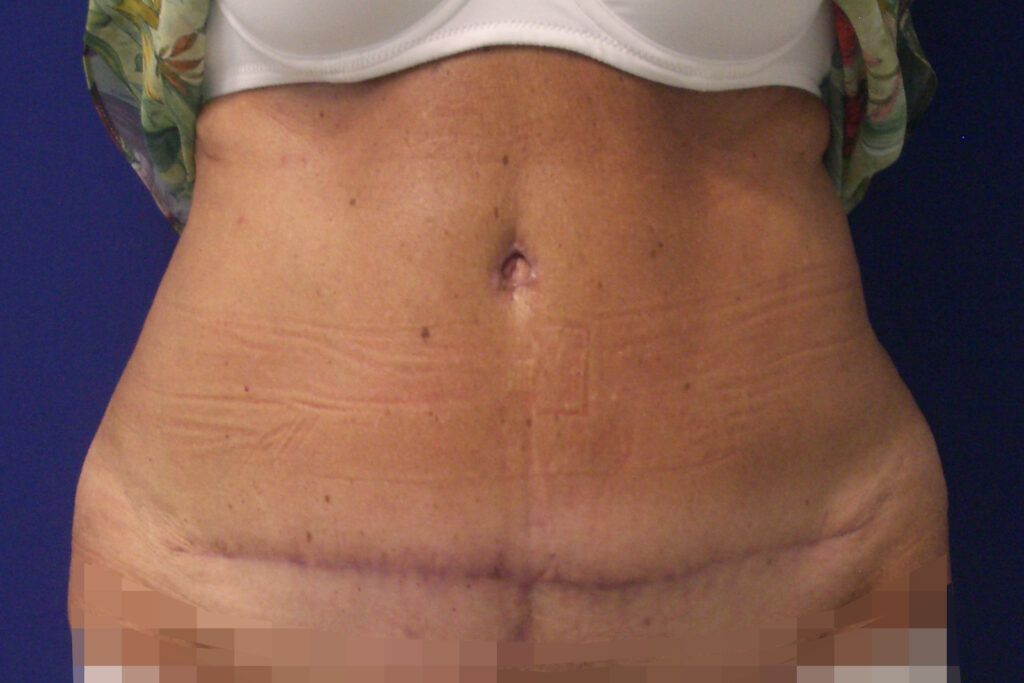
Real cases
Before and after abdominosplasty
Throughout all these years many patients have trusted us. We show you some real cases.




Team
Expert team in abdominoplasty



FAQs
Abdominoplasty procedure
A full abdominoplasty usually takes 2 to 4 hours, depending on the amount of correction needed.
A mini-abdominoplasty usually takes 1 to 2 hours.
Is the postoperative period after abdominoplasty very painful?
During the first few days the abdomen is usually somewhat swollen and some discomfort or pain may be felt, which is controlled with medication.
Depending on the extent of the surgery, you may go home after a few hours or stay 2 or 3 days in the clinic.
Your plastic surgeon will give you instructions for showering and changing your bandages. Although you may not have to stretch at first, you should begin walking as soon as possible.
The external skin stitches will be removed in 5 to 7 days; the internal stitches, whose ends come out through the ends of the incision, in 2 to 3 weeks.
The bandage will be replaced by an abdominal binder.
What type of anesthesia is necessary?
The type of anesthesia most commonly used for abdominoplasty is general anesthesia, during which you will be asleep until the surgery is completed.
In some cases, especially in mini-abdominoplasty and abdominal liposuction, local anesthesia plus sedation may be used, so that during surgery you will be awake but relaxed, and the abdominal region is insensitive to pain (sometimes you may feel some discomfort).
Are the results definitive?
In most cases the results are definitive, as long as they are accompanied by a balanced diet and regular exercise.
If you are realistic in your expectations and are able to tolerate the presence of a definite, though concealable, abdominal scar and a long recovery period, abdominoplasty may be right for you.
How is the recovery after abdominoplasty?
It may take a few weeks to a few months to get back to the way you felt before. If your pre-surgery physical condition is good, including a strong abdominal musculature, recovery after abdominoplasty will be faster.
Some people return to work in about 2 weeks, while others need 3 to 4 weeks of rest and recovery. Physical exercise helps to recover sooner.
Even people who do not practice sports before surgery should follow an exercise program to reduce swelling, reduce the possibility of venous thrombus formation and tone muscles.
However, strenuous exercise should be avoided until you feel comfortable. Scars may appear to worsen during the first 3 to 6 months while they are healing; this is normal.
It is necessary to wait between 9 months and 1 year for the scar to flatten and lighten. Although the scars will never disappear, they will not be visible, even when wearing a bikini or swimsuit.